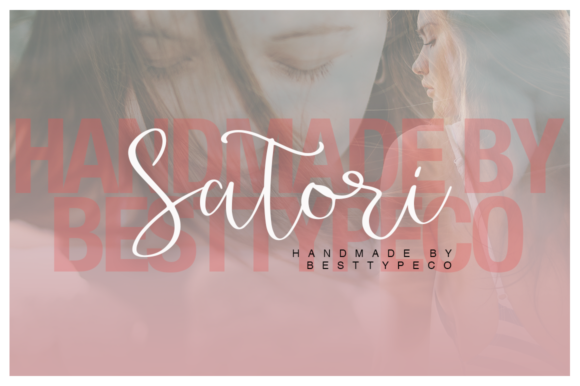
Satori: A Handwritten Font for Authentic Design
There’s a certain magic in a font that feels genuinely human. In a digital world saturated with clean, geometric precision, a touch of organic warmth can make all the difference. This is where Satori enters the conversation. It’s not just another script font; it’s a carefully crafted typeface designed to bring personality, elegance, and a distinct sense of authenticity to your work. The letterforms flow with a natural, cursive rhythm, each stroke balanced to feel both spontaneous and intentional. Its well-rounded characters and consistent baseline create a harmonious visual texture that’s easy on the eyes, making it far more than a decorative element—it’s a tool for connection.
Where Satori Truly Shines
Understanding a font’s strengths is key to using it effectively. Satori’s versatile style isn’t a vague promise; it translates into specific, high-impact applications across the creative spectrum. Think of it as a specialist in adding a personal, artisanal touch without sacrificing readability or professionalism.
For brand identity, Satori can be the cornerstone of a logo for a boutique business, a lifestyle brand, or a creative studio. It immediately communicates approachability, craftsmanship, and care. Imagine it on a coffee shop’s logo, a florist’s packaging, or a handmade jewelry brand’s hang tag. It tells a story before a single word is read.
In editorial and publishing design, Satori excels as a headline or pull-quote font. It can break up the monotony of a standard serif font or sans serif font in a magazine spread, book cover, or blog header, drawing the reader’s eye to key moments. Its character also makes it a fantastic choice for designing inspirational quotes, greeting cards, and wedding invitations where a personal touch is paramount.
Digital spaces benefit immensely from its warmth. As a creative font for social media graphics, Satori can stop the scroll. Use it for Instagram quote posts, Facebook event headers, or Pinterest pins to create visuals that feel more like a conversation than an advertisement. On web design, it’s a powerful choice for hero section callouts, short descriptive lines, or navigation menu labels on sites for creative professionals, artists, and consultants, adding a layer of personality that standard web fonts often lack.
Practical Guidance for Using Satori
Falling in love with a font’s aesthetics is the first step. The next, more crucial step, is evaluating its practical fit for your project. Here’s a grounded approach to integrating Satori into your workflow.
First, consider the context and audience. Satori’s handwritten style carries a specific connotation—it’s friendly, creative, and personal. It’s perfect for a yoga studio’s brochure but might feel out of place on a formal legal document or a corporate financial report. Always ask: does this font’s personality align with the message and the people I’m trying to reach?
Next, test font pairings rigorously. No font is an island. Satori’s fluidity creates a beautiful contrast with clean, structured fonts. A classic pairing strategy is to use it as a display font for headings alongside a highly legible sans serif font like Montserrat or Lato for body text. Alternatively, pairing it with a crisp, old-style serif font like Garamond can create a sophisticated, editorial feel. The goal is balance—let Satori provide the flair while its partner ensures clarity and readability in longer passages.
Always review the full character set and any included styles. A quality premium font like Satori often comes with alternates, ligatures, or stylistic sets. These are not just extras; they are essential tools. Alternates allow you to vary the look of specific letters (like the lowercase ‘a’ or ‘g’) to avoid repetition and add a more authentic, hand-lettered feel. Exploring these options is what separates good design from great design.
Regarding readability, use Satori judiciously. It is, at its heart, a script font, which means it’s optimized for impact at larger sizes. For body copy or small text, its intricate details can become muddled. The golden rule: use it for headlines, logos, short phrases, and accents. Rely on a more neutral typeface for the core informational text.
Finally, understand the licensing. If you’re using Satori for a commercial project—anything from a client’s logo to a product you sell—you must ensure you have the appropriate commercial license. Many freebie offers are for personal use only. Respecting font licensing not only keeps you legally compliant but also supports the type designers who create these valuable design assets.
Satori is more than a beautiful typeface; it’s a bridge between the digital and the human. By thoughtfully applying its strengths, you can elevate your logo design, packaging design