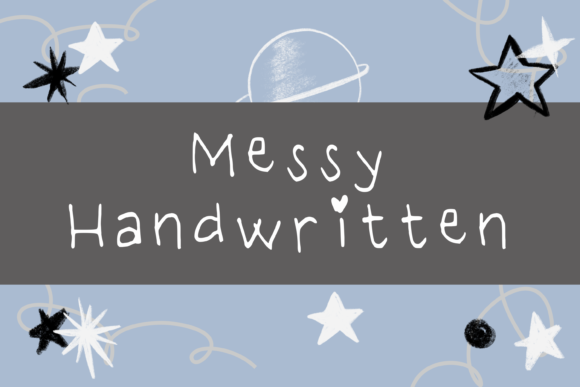
Messy: The Handwritten Font That Brings Authentic Charm to Your Projects
Understanding the Visual Personality of Messy
When you first encounter the Messy typeface, you immediately notice its warmth. It doesn't try to be perfect, and that is precisely its strength. As a handwritten font, it captures the organic flow of actual pen on paper, complete with slight imperfections and varying baseline shifts that mimic human writing. It avoids the rigid geometry found in standard sans serif font families, offering instead a soft, approachable aesthetic. This is a creative font designed to feel personal. The strokes are generally relaxed, suggesting a casual confidence that works well for designs needing a human touch. If you are looking for a script font alternative that feels less formal than traditional calligraphy but more structured than a quick scrawl, Messy strikes a compelling balance.
The character of this typeface lies in its texture. Unlike a premium font that might aim for mathematical precision, Messy embraces the "wabi-sabi" of design. It feels lived-in and genuine. This makes it an excellent choice for projects where you want to bypass the corporate barrier and speak directly to the reader. It functions beautifully as a display font, drawing attention not through sheer weight or size, but through its personality. Whether you are a designer working on a mood board or a blogger crafting a header, the visual weight of Messy adds a layer of storytelling before the audience even reads the words.
Strategic Applications for Branding and Marketing
For entrepreneurs and brand strategists, choosing a typeface is a decision about voice. Messy is particularly effective for brands that want to position themselves as friendly, artisanal, or approachable. Think about packaging design for organic goods, handmade soils, or boutique coffee roasters. A rigid, geometric sans serif font might feel too industrial for these products. Messy, however, instantly communicates that there is a human behind the product. It helps build a brand identity that feels accessible rather than distant.
In the realm of marketing, specifically social media graphics, stopping the scroll is everything. Because Messy looks like a handwritten note, it triggers a psychological response that feels more intimate than standard digital text. It works exceptionally well for Instagram stories, quote cards, or sale announcements where you want to mimic the look of a whiteboard or a notebook. However, as a creative professional, I would advise caution with editorial design. While Messy is a fantastic display font for headlines in a magazine or a newsletter, it is not a serif font built for long-form reading. Its personality is strong, and using it for body text would lead to fatigue. Always pair it with a clean, legible sans serif font or a neutral serif font for the main copy to maintain readability.
Technical Considerations and Pairing Strategies
Effective modern typography is rarely about using a single typeface in isolation. It is about the conversation between different fonts. When integrating Messy into your web design or print layouts, consider the contrast. Because Messy is organic and irregular, it pairs best with something structured. A geometric sans serif provides a clean backdrop that allows the handwritten font to shine without cluttering the visual field. This contrast creates a clear visual hierarchy, guiding the viewer’s eye from the expressive headline to the functional information.
Before deploying this typeface across your design assets, take a moment to test it in context. Readability can vary depending on the background color and size. At very small sizes, the charm of a handwritten style can turn into visual noise. Ensure you are using it for high-impact moments. Additionally, while Messy is available as a freebie, it is vital to check the specific terms of the commercial font license if you are using it for client work or merchandise. Understanding the licensing ensures your logo design or product packaging remains compliant.
Ultimately, Messy is a tool for connection. It breaks down the sterility of digital communication and adds a layer of tactile reality. Whether you are a crafter selling on Etsy, a publisher designing a book cover, or a content creator developing a personal brand, this typeface offers a way to inject personality into your work. It proves that in modern typography, perfection isn't always the goal—sometimes, the most effective design is the one that feels a little bit messy.