Mandara: The Dingbats Font That Brings Mandalas to Your Designs
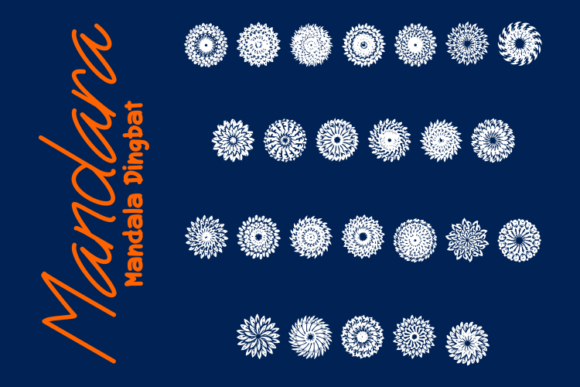
In the world of typography, we often focus on letters, numbers, and punctuation. But there's a fascinating category known as dingbats—fonts made entirely of symbols, ornaments, and decorative elements. Among these, Mandara stands out as a truly special collection. This isn't your typical set of arrows or stars; it's a curated gallery of intricate, hand-drawn mandala designs, all accessible from your keyboard.
Imagine having a library of beautiful, symmetrical patterns at your fingertips. Each keystroke reveals a unique mandala, ranging from simple geometric forms to elaborate floral arrangements. The visual personality of Mandara is one of artistry, mindfulness, and decorative richness. It carries a modern yet timeless appeal, blending organic hand-drawn lines with precise digital clarity. For designers and creators, this transforms a simple font into a powerful design asset.
Where Does a Mandala Font Like Mandara Truly Shine?
The applications for a creative font like Mandara extend far beyond mere decoration. Its strength lies in its ability to add instant visual interest and a thematic layer to projects. Think of it as a shortcut to intricate design work. Instead of spending hours drawing vector mandalas, you can typeset them in seconds. This makes it invaluable for projects where time is as precious as creativity.
In brand identity, a single, well-placed mandala can become a cornerstone. Use it as a standalone logo mark for a yoga studio, a wellness brand, or a creative agency. The intricate detail conveys craftsmanship and thoughtfulness. For packaging design, repeating a smaller mandala pattern can create stunning wrapping paper, box liners, or label backgrounds that feel premium and handmade.
The digital space offers endless possibilities. As a web design element, a large mandala can serve as a captivating hero image or a subtle background texture that adds depth without overwhelming content. For social media graphics, these symbols are perfect for creating eye-catching posts, story highlights, and profile accents that stop the scroll. They inject personality into quotes, announcements, and promotional banners.
For editorial design and publishing, Mandara is a secret weapon. Use it to create ornate drop caps, chapter dividers in a book, or decorative borders for a magazine spread. It adds a layer of sophistication and visual storytelling that plain text cannot achieve. Crafters and hobbyists will find it equally useful for designing custom wedding invitations, greeting cards, art prints, and DIY projects that demand a unique, artistic touch.
Making Mandara Work for You: Practical Font Guidance
Adopting a specialized premium font like this requires some practical consideration to ensure it enhances rather than hinders your work. The first step is evaluating project fit. Mandara is a display font at heart, meaning it's designed for impact at larger sizes. It excels in headlines, logos, and decorative elements but would be unreadable for body copy. Its purpose is to be seen and admired, not to convey long paragraphs of information.
This leads to the critical practice of font pairing. To maintain visual hierarchy and readability, pair Mandara with a clean, neutral typeface. A simple sans serif font like Helvetica, Arial, or a modern geometric sans works beautifully for body text, providing a calm counterpoint to the ornate mandalas. Alternatively, a classic serif font can complement its elegance for more traditional or luxurious projects. Avoid pairing it with other highly decorative scripts or handwritten fonts, as this can create visual chaos and confuse the viewer's eye.
Before committing, always test the font in context. Type out the specific mandalas you plan to use. See how they look at the intended scale on both screen and in print (if applicable). Check the balance between positive and negative space in your layout. Does the mandala add to the design's message, or does it distract? A good design always serves a purpose.
Finally, understand the licensing. Mandara is a commercial font, meaning its use in commercial projects (client work, products for sale, business marketing) typically requires a purchased license. Always review the license agreement included with your font files. This ensures you have the right to use it for your intended purpose, whether for personal projects or professional work, and supports the type designers who create these valuable design assets.
More Than a Font: A Tool for Creative Expression
Ultimately, Mandara is more than just a collection of glyphs; it's a tool for creative expression. It bridges the gap between traditional artistry and modern digital workflow. For the entrepreneur building a brand, it offers a distinctive visual symbol. For the content creator, it provides a quick way to elevate graphics. For the crafter, it unlocks a new realm of pattern and design.
By understanding its strengths as a creative font and applying it with thoughtful font pairing and strategic placement, you can leverage its full potential. It influences brand perception by adding a layer of detail and intentionality that audiences notice subconsciously. It enhances audience engagement through visually rich and shareable graphics. In a landscape filled with standard modern typography, a well-used asset like Mandara can be the detail that makes your project memorable and distinctly yours.