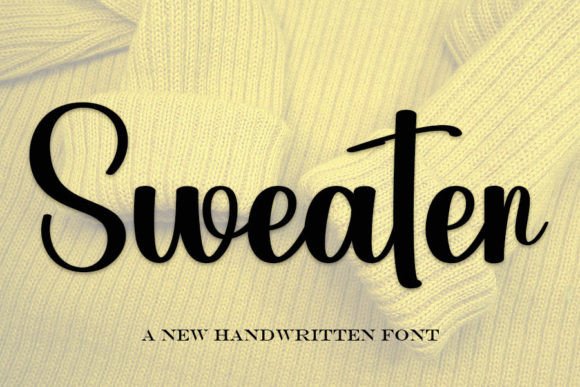
The Sweater Font: A Handwritten Typeface for Timeless Design
Visual Character and Personality
When you first encounter the Sweater font, you immediately notice its elegant, handwritten style. It’s not just another script font; it carries a distinct personality that feels both personal and polished. The letterforms feature a natural, flowing rhythm with subtle variations in stroke weight, mimicking the authentic feel of hand-lettering. This premium font avoids the overly casual or messy look common in many handwritten typefaces. Instead, it strikes a balance—neat, beautiful, and timeless. The slight imperfections and organic curves give it warmth, while its overall structure ensures legibility. This makes Sweater a creative font that feels approachable yet sophisticated, perfect for projects that need a human touch without sacrificing professionalism.
Where Sweater Shines: Practical Applications
Understanding where a font works best is crucial for any designer or creator. Sweater excels in contexts where you want to evoke emotion, elegance, or a handcrafted feel. It’s a versatile display font that can be a star in headline compositions or as an accent font in broader layouts. In logo design, it adds a unique, memorable character to brand marks, especially for businesses in lifestyle, beauty, artisanal goods, or boutique services. Think of a bakery, a wedding planner, or a handmade jewelry brand—Sweater helps build a brand identity that feels authentic and connected.
For editorial design, such as magazine features, blog headers, or book covers, Sweater brings a layer of sophistication and personality. It draws the reader in, setting a tone that’s often more engaging than a standard serif font or sans serif font. In packaging design, it can make product labels stand out on the shelf, communicating quality and care. Its elegance also translates well to social media graphics, where quick visual impact is key. An Instagram quote graphic or a Pinterest pin using Sweater can stop the scroll and increase engagement because it feels crafted and intentional.
Beyond digital, Sweater is a valuable design asset for print projects like invitations, greeting cards, stationery, and posters. For small business owners and entrepreneurs, using a font like Sweater in marketing materials—from business cards to website banners—can elevate perceived value. It helps create a cohesive and professional look across multiple touchpoints, reinforcing brand recognition. Bloggers and content creators will find it useful for adding a distinctive header to articles or creating visually appealing lead magnets.
Integrating Sweater into Your Design Workflow
Choosing the right font is just the first step. To use Sweater effectively, consider a few practical guidelines. First, evaluate the project fit. Sweater is a handwritten font, so it’s ideal for projects that benefit from a personal, elegant, or artisanal aesthetic. It might not be the best choice for long body text in a technical manual, but it could be perfect for the cover of a cookbook or the title of a lifestyle blog.
Next, think about font pairing. A strong display font like Sweater often pairs best with a simpler, highly legible typeface for body copy. Try combining it with a clean sans serif font like Lato or Open Sans for modern contrast, or with a classic serif font like Garamond or Georgia for a more traditional, elegant feel. The key is to let Sweater be the focal point in headlines or key phrases, while the supporting font handles the readable text. Always test pairings in context—view them at different sizes and on various backgrounds to ensure harmony.
Review the included styles and weights of the Sweater font you purchase. Many premium fonts come with multiple versions, such as regular, bold, or italic, which can add versatility to your designs. Check the character set for special glyphs, ligatures, or alternate letters that can enhance your typography. When testing readability, pay attention to letter spacing (tracking) and line spacing (leading). Handwritten fonts can sometimes need slight adjustments to spacing to ensure clarity, especially at smaller sizes. Increase tracking slightly if letters feel too cramped, and ensure line height is sufficient for comfortable reading.
Finally, always verify the commercial font licensing. Understand the terms of use for your specific project, whether it’s for a client’s logo, a product you sell, or a website you design. Reputable font foundries provide clear licensing information, so you can use the font with confidence across your commercial work. By thoughtfully applying Sweater—considering its personality, testing its applications, and pairing it wisely—you can create designs that are not only beautiful but also effective and consistent. It’s a modern typography choice that helps your work stand out with a timeless, elegant flair.