Easy: A Simple, Clean Display Font for Modern Projects
Finding a font that feels both contemporary and effortless can be a challenge. Many typefaces try too hard, with excessive flourishes or overly rigid geometric forms. Easy takes a different approach. It’s a premium display font built on the principles of clarity and simplicity, offering a clean aesthetic that adapts to a surprising range of creative needs. For designers and creators, it represents a versatile tool in your design assets toolkit—one that can elevate a project without overwhelming it.
Understanding the Visual Character of Easy
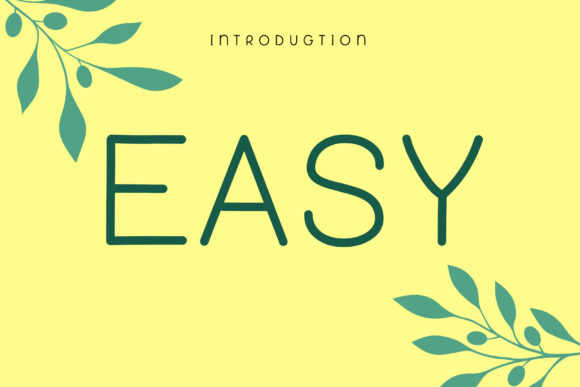
At its core, Easy is a modern display typeface. Its letterforms are defined by smooth curves, consistent stroke widths, and open counters—the negative space inside letters like ‘e’ or ‘a’. This careful balance is what gives it that “simple and clean” quality. It avoids the stark, sometimes cold feel of a pure geometric sans serif, and it doesn’t carry the historical baggage of a traditional serif font. Instead, it occupies a sweet spot: friendly yet professional, distinctive yet highly legible.
The personality of Easy is approachable and confident. It doesn’t shout for attention but rather draws the eye with its inherent balance and rhythm. This makes it an excellent choice for projects where the message needs to take center stage, supported by a typographic voice that is clear and reliable. Whether set in all caps for a bold headline or in a flowing sentence, it maintains its composure and readability.
Where Easy Truly Shines: Practical Applications
The strength of a creative font like Easy lies in its adaptability. Its clean lines make it suitable for both digital and print environments, across commercial and personal projects. Think beyond the obvious. Yes, it’s fantastic for logo design and brand identity systems, where a mark needs to be scalable and memorable. But its utility extends much further.
For editorial design, consider using Easy for chapter headings in a book or as a standout pull quote in a magazine layout. Its clarity ensures it reproduces well at various sizes. In packaging design, it can communicate product attributes—like modern, organic, or tech-savvy—without a word of copy. For web design, it’s an asset for hero section headlines, button text, or key navigation elements, contributing to a clean user interface.
Marketers and content creators will find it invaluable for social media graphics. A clean, bold font cuts through the noise of a busy feed, making announcements, quotes, or calls-to-action instantly readable. For bloggers and publishers, it can unify the look of a blog header, infographic titles, and newsletter banners, creating a consistent visual language that builds reader recognition.
Beyond the Screen: Print and Personal Projects
Easy’s charm isn’t limited to the digital realm. Its straightforward construction translates beautifully to print. Imagine it on a wedding invitation, setting a tone of modern elegance. Use it for the titles on a photo album cover, for motivational text in a planner, or for headers on a greeting card. Crafters and hobbyists can leverage it for decoration projects, custom stationery, or scrapbooking elements where a clean, professional touch is desired.
For small business owners, this font can become a workhorse. Apply it to business cards, invoices, product tags, and promotional flyers. Using a consistent, high-quality typeface like Easy across all touchpoints strengthens your brand’s professionalism and aids in audience recognition. It signals that you care about the details, which builds trust.
Integrating Easy into Your Workflow: A Practical Guide
Choosing the right font is just the first step. Using it effectively is what makes the difference. Start by evaluating the project’s tone. Easy’s modern neutrality makes it a strong candidate for a wide variety of themes, but always test it in context. Place a headline set in Easy alongside your body copy (which might be a complementary serif font or a simple sans serif) to see how they interact. This process of font pairing is crucial. Easy often pairs well with both more traditional serif fonts for contrast and with other clean sans serifs for a unified, modern look.
Always review the font’s full character set and included styles. Does it have the necessary punctuation, numerals, and language support for your audience? Does it offer weights like Regular, Bold, or Light that can help you establish a clear visual hierarchy in your designs? Using weight variation is a simple way to guide the viewer’s eye from the most important element to the supporting details.
Readability is paramount. While Easy is designed for clarity, always test it at the intended size and in the intended medium. A font that looks perfect on a large monitor might become less distinct on a small mobile screen or when printed in fine detail on textured paper. Make adjustments to size, spacing (tracking and leading), and color contrast to ensure your message is effortlessly received.
Finally, ensure you are using a properly licensed commercial font. This protects your work and supports the type designers who create these essential tools. A legitimate license guarantees you have the right to use the font in all your projects, whether for a client, your own business, or personal enjoyment.
Easy is more than just a set of letters; it’s a design solution. Its blend of simplicity, versatility, and professional polish makes it a worthy addition to any designer’s or creator’s repertoire. By understanding its character and applying it thoughtfully, you can harness its power to bring clarity, cohesion, and a touch of modern sophistication to everything you create.