Clean Notes: The Handwritten Font That Keeps Its Cool
There's a particular kind of frustration that comes with trying to find a handwritten font that actually works in professional settings. You want the warmth, the personality, the human touch—but most script fonts either look like a teenager's diary or a wedding invitation from 2008. Clean Notes occupies that rare middle ground: it's a premium font that reads like genuine handwriting without sacrificing legibility or professionalism.
What Makes This Typeface Tick
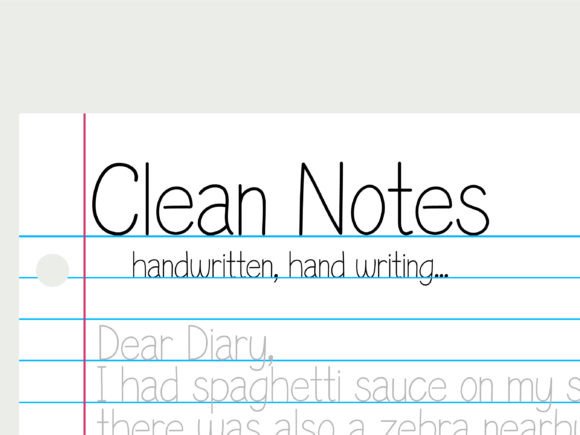
At first glance, Clean Notes presents itself as a classic handwritten font with clear letterforms and consistent spacing. But spend a few minutes setting type with it, and you'll notice the subtle design decisions that separate it from the hundreds of casual script fonts flooding marketplaces. The x-height sits comfortably in a readable range. Letter connections feel natural rather than forced. The overall rhythm mimics actual pen-on-paper movement without the chaos that makes most handwritten typefaces impractical for anything longer than a headline.
What strikes me most about this creative font is its restraint. Many designers creating handwritten fonts feel compelled to add flourishes, exaggerated loops, and dramatic swashes. Clean Notes takes the opposite approach. The ascenders and descenders maintain reasonable proportions. Individual characters remain distinct—your lowercase "a" won't be mistaken for an "o" at small sizes. This discipline is what makes it genuinely useful rather than merely decorative.
The personality here skews approachable and honest. It doesn't try to be edgy or avant-garde. Instead, it channels the energy of a well-organized notebook, the kind where someone actually cares about readability. Think of a thoughtful brand strategist's meeting notes, not a doctor's prescription pad. That quality alone opens up applications that most handwritten fonts simply can't support.
Where Clean Notes Earns Its Place
Let's talk practical applications, because a font is only as valuable as the projects it can actually serve. Clean Notes works remarkably well across several categories that matter to working creatives and business owners.
Packaging design is where I'd start. Artisan food brands, handmade cosmetics, boutique candle companies—any product that wants to signal authenticity without looking amateur. Pair Clean Notes with a clean sans serif font for product descriptions, and you've got a visual system that communicates craft without veering into precious territory. The font handles ingredient lists and small-print details better than most script fonts, which is a genuine practical advantage when you're working with limited label space.
Editorial design benefits from this typeface in specific contexts. Pull quotes, chapter headings in lifestyle books, magazine sidebars, and recipe headers all suit its character. I wouldn't set body copy with it—that's not what handwritten fonts are for—but as a display font for accent text, it adds visual interest without derailing a layout's hierarchy. Bloggers creating long-form content can use Clean Notes for section breaks or featured quotes to add personality to otherwise text-heavy pages.
Brand identity work presents another strong use case. Small businesses, particularly those in wellness, education, food service, and creative industries, often need a logo design that feels personal rather than corporate. Clean Notes can anchor a wordmark or complement a broader visual identity system. The key is understanding its limitations: this isn't a typeface for a law firm or a fintech startup. It belongs to brands that want to feel like a conversation, not a presentation.
Social media graphics represent perhaps the most immediate opportunity. Content creators constantly need fonts that read well at thumbnail sizes and maintain personality across platforms. Clean Notes handles Instagram stories, Pinterest pins, and YouTube thumbnails with consistency. Its legibility at various screen resolutions—a genuine concern with many handwritten fonts—makes it practical for digital-first workflows.
Web design applications deserve specific mention. Used sparingly for call-to-action text, testimonial attributions, or section headings on lifestyle and e-commerce sites, this typeface can humanize a digital experience. The trick is restraint. A single instance of Clean Notes on a landing page adds warmth; overuse creates visual noise and undermines the credibility you're trying to build.
Making Smart Decisions with This Design Asset
Choosing any font for a project involves more than aesthetic preference. With a handwritten typeface like Clean Notes, several practical considerations deserve attention before you commit.
Font pairing is where projects succeed or collapse. Clean Notes needs a grounding companion—typically a well-designed serif font or sans serif font that handles the heavy lifting of body text and structured information. Try it alongside geometric sans serifs for a modern contrast, or pair it with transitional serifs for something warmer and more traditional. Avoid pairing it with other decorative fonts. The goal is contrast, not competition.
Readability testing matters more than you might expect. Set Clean Notes at the actual sizes you'll use in your project, then step back. Can you read it at arm's length? Does it maintain clarity on both light and dark backgrounds? Print a sample if you're working on physical products. Screen rendering and print reproduction behave differently, and what looks perfect in your design software might lose definition on textured paper or low-resolution screens.
Review the full character set before starting production. Premium fonts typically include multiple weights, alternates, ligatures, and extended language support. Understanding what's available prevents mid-project surprises. Check whether Clean Notes includes the punctuation marks, numerals, and special characters your specific project requires. A beautiful typeface loses its value quickly if it can't render a phone number or an accented character correctly.
Licensing deserves careful attention. Commercial font licensing varies significantly between foundries and distributors. Verify that your intended use—whether that's a client's logo, a product line, a mobile app, or merchandise—falls within the license terms you've purchased. Most premium fonts offer tiered licensing based on usage scope, and the cost difference between a desktop license and an extended commercial license is usually modest compared to the legal exposure of using a font outside its terms.
Evaluate project fit honestly. Not every brief calls for a handwritten font, no matter how well-designed. Clean Notes serves projects that benefit from human warmth, personal connection, and approachable sophistication. If your audience expects authority, precision, or technical expertise, a different typeface category will serve you better. The best designers I know choose fonts based on what the project needs, not what they personally find attractive.
Building Consistency Across Touchpoints
One advantage of working with a well-crafted typeface like Clean Notes is the consistency it enables across multiple brand touchpoints. When a small business owner uses the same handwritten font on their website headers, packaging, email signatures, and printed materials, they're building recognition through repetition. That consistency—paired with appropriate font pairing strategies—creates a cohesive visual identity that audiences begin to associate with the brand itself.
Modern typography rewards this kind of discipline. Audiences don't consciously analyze your font choices, but they register the cumulative effect. A brand that feels consistently warm, approachable, and genuine across every interaction builds trust faster than one that changes visual direction with every new project.
Clean Notes makes that consistency achievable without requiring a massive design budget or a dedicated brand guidelines document. Its versatility across print and digital applications, combined with its restrained personality, means you can deploy it broadly without it wearing out its welcome. That's the real test of any design asset—not whether it impresses in isolation, but whether it continues to serve your goals across the full scope of your work.
For designers, marketers, content creators, and business owners building brands that need to feel genuinely human, this typeface offers something increasingly rare: a handwritten aesthetic that actually holds up under professional scrutiny. It won't solve every typographic challenge you'll face, but in the right context, it solves them beautifully.