Marly Rosemary: A Stylish Script for Modern Brands
There’s a moment in every design project when you need a typeface that does more than just convey information. You need a font that carries a specific emotion, a subtle whisper of elegance or a confident flourish of personality. This is where Marly Rosemary enters the conversation. It’s not just another script font; it’s a carefully balanced instrument for adding a touch of refined, human warmth to your work. The appeal lies in its delicate, flowing letterforms that feel both intentional and organic, a combination that’s surprisingly hard to find.
The Anatomy of a Delicate Script
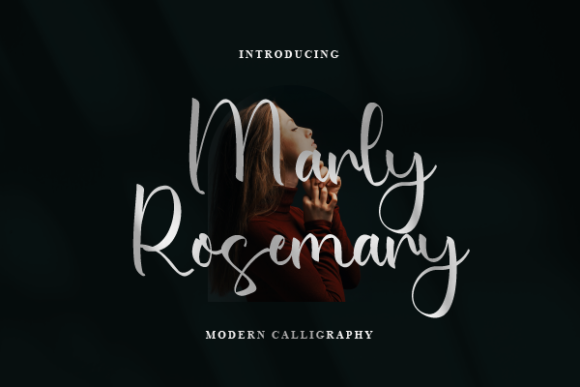
Let's break down what makes Marly Rosemary visually distinct. At its core, it’s a stylish, well-balanced and delicate script font. The strokes have a natural, almost hand-lettered quality, but without the erratic wobble that can make some handwritten fonts difficult to read. The letter connections are smooth, creating a rhythmic flow that guides the eye gently along the baseline. The ascenders and descenders—the parts of letters like 'h' and 'y' that extend above and below—have a graceful, elongated curve. This gives the font a sense of airy space and prevents it from feeling cramped or heavy.
Its personality is one of accessible sophistication. It doesn’t shout; it speaks with clarity and poise. Think of it as the typographic equivalent of a beautifully handwritten note on high-quality stationery. This makes it a powerful creative font for projects where you want to communicate care, attention to detail, and a personal touch. It’s a premium font that feels premium not because it’s overly ornate, but because of its thoughtful design and harmonious proportions. As a display font, it’s meant for headlines and accents, not body copy, where its true strengths shine.
Where Marly Rosemary Finds Its Voice
Understanding a font’s ideal environment is key to using it effectively. Marly Rosemary excels in contexts where visual appeal and emotional resonance are paramount. Its strengths are particularly evident in specific design disciplines.
In packaging design, a script font can instantly elevate a product. Imagine Marly Rosemary gracing the label of an artisanal jam, a luxury candle, or a boutique skincare line. It adds an immediate layer of perceived quality and craftsmanship. For brand identity, it’s a fantastic choice for a logo or logotype, especially for businesses in the wedding industry, boutique retail, lifestyle blogging, or any service that values a personal, curated aesthetic. It helps build a brand identity that feels both elegant and approachable.
The font is equally at home in editorial design. Use it for magazine cover headlines, pull quotes, or section titles to create visual interest and break the monotony of standard serif font or sans serif font blocks. In the digital realm, it’s a standout choice for social media graphics. A beautifully set quote, a sale announcement, or a blog post title using Marly Rosemary can stop the scroll and increase engagement. It brings a human element to the often-sterile digital landscape. For web design, it’s best used sparingly for hero text or key calls-to-action, always paired with a highly readable body font.
Making It Work: Practical Guidance for Your Project
Choosing a font is only half the battle; implementing it well is what separates good design from great design. Here’s how to think about integrating Marly Rosemary into your workflow.
First, evaluate the project fit. Is the tone of your project romantic, elegant, organic, or personal? If the answer is yes, this font is likely a strong candidate. If the tone is corporate, technical, or ultra-modern, you might need something starker. Always test the font with your actual content. Does it read well at the size you need? Script fonts can become illegible at very small sizes, so ensure your key messages remain clear.
Next, master the art of font pairing. A script font like Marly Rosemary needs a partner to do the heavy lifting. It pairs beautifully with a clean, geometric sans serif font for a modern contrast, or with a classic, transitional serif font for a more traditional, sophisticated feel. The rule of thumb is to let the script be the star for headlines or accents, while its partner handles paragraphs and smaller text. This creates a clear visual hierarchy and ensures overall readability.
Finally, consider the practicalities. Review the font’s included styles—does it have alternate characters or ligatures that can add variety? For any commercial use, verify the commercial licensing terms. Most premium fonts like this come with licenses for both print and digital use, but it’s crucial to ensure your license covers your intended application, whether it’s a one-off project or ongoing marketing materials. Treat it as one of your essential design assets, chosen and deployed with intention.
Ultimately, Marly Rosemary is more than just a typeface; it’s a tool for storytelling. Its power lies in its ability to infuse a design with personality and grace without overwhelming the message. By understanding its character and applying it thoughtfully, you can leverage this modern typography to create work that feels both professionally polished and genuinely human. Whether you’re crafting a logo design, laying out a wedding invitation, or creating a standout Instagram post, it offers a reliable way to add that sought-after touch of elegance and connection.